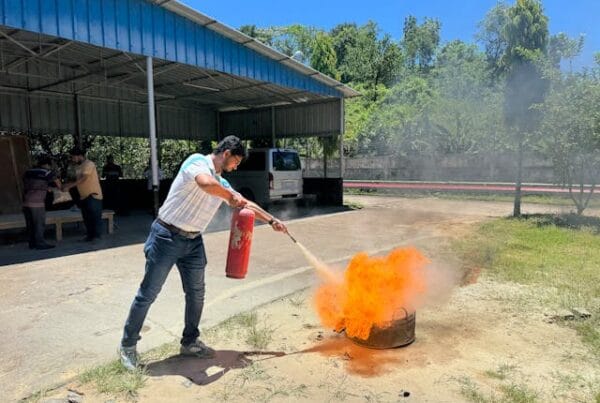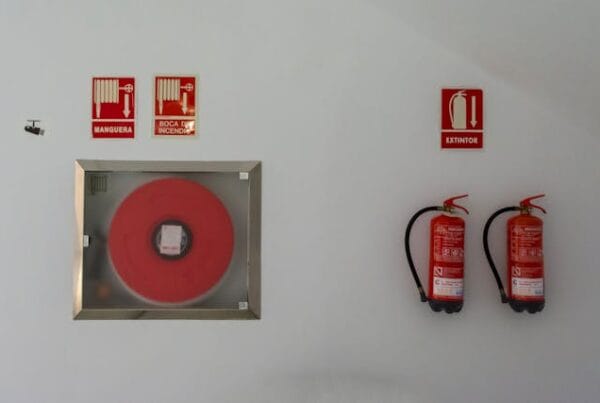


Understanding the Types of Fire Extinguishers and Their Functions is fundamental knowledge that every business owner, building manager, and even individual at home must possess. A mistake in choosing or using a Portable Fire Extinguisher (APAR) can not only result in failure to extinguish a fire but can also worsen the situation and endanger lives. At Sefirepro, we believe that education is the front line of fire protection. This article will thoroughly explore the various types of fire extinguishers available on the market, explaining their specific functions based on fire classes, so you can make the right decision to protect your property and the people around you.
Choosing the right extinguisher starts with understanding the source of the fire. Not all fires are the same; a fire caused by burning paper requires different handling than one caused by an electrical short circuit. Therefore, fire classification becomes the primary basis for determining the most effective type of fire extinguisher.
Fire Classification: The Key to Understanding Types of Fire Extinguishers and Their Functions
Before we delve deeper into the types of fire extinguishers and their functions, it’s crucial to understand the fire classifications according to standards in Indonesia, which generally refer to international standards like the NFPA (National Fire Protection Association).
- Class A: Fires involving ordinary combustible solid materials (excluding metals), such as wood, paper, cloth, rubber, and plastic. This is the most common type of fire in office and residential environments.
- Class B: Fires involving flammable liquids and gases, such as gasoline, oil, diesel, paint, thinner, alcohol, and LPG.
- Class C: Fires involving energized electrical installations or electronic equipment, such as short circuits in electrical panels, computers, or industrial machinery.
- Class D: Fires involving combustible metals, such as magnesium, titanium, potassium, and sodium. This type of fire is rare in general environments, occurring more often in specific industries or laboratories.
- Class K: Fires involving cooking media (oils and fats) in commercial kitchen appliances, such as in restaurants or hotels.
Understanding these classes will make it easier for you to match the risks in your environment with the appropriate extinguisher.
Exploring the Various Types of Fire Extinguishers and Their Functions Specifically
After knowing the fire classes, it’s time to discuss in detail the various types of fire extinguishers and their functions. Each extinguisher has a different extinguishing agent with its own advantages and disadvantages.
1. Water-Type Extinguisher
This type of extinguisher contains pressurized water and is the most economical type of extinguisher.
- Primary Function: Highly effective for extinguishing Class A fires. Water works by cooling the heat source so the material can no longer burn.
- Not Suitable For: Class B fires (will spread the burning liquid), Class C fires (risk of electric shock), and Class K fires.
- Applications: Wood storage warehouses, textile factories, schools, and office areas without many electronic devices.
2. Foam-Type Extinguisher (AFFF)
This extinguisher contains a mixture of water and a foam surfactant (Aqueous Film Forming Foam).
- Primary Function: Effective for Class A fires and very effective for Class B fires. The foam works in two ways: cooling the fire (due to the water content) and blanketing the surface of the burning liquid to prevent its vapors from mixing with oxygen.
- Not Suitable For: Class C fires because it is conductive.
- Applications: Parking areas, gas stations, chemical plants, and industries involving flammable liquids. For industrial protection solutions, you can view Sefirepro’s industrial fire protection system services.
3. Dry Chemical Powder Extinguisher
This is the most versatile and commonly found type of extinguisher. The medium inside is a dry chemical powder like sodium bicarbonate or monoammonium phosphate.
- Primary Function: ABC Powder extinguishers are very effective for Class A, B, and C fires. They work by interrupting the chemical reaction in the fire triangle.
- Disadvantages: Leaves a corrosive and difficult-to-clean powder residue, which can damage sensitive electronic equipment.
- Applications: Offices, hospitals, malls, factories, and vehicles. Sefirepro provides certified Dry Chemical Powder extinguishers.
4. Carbon Dioxide (CO2) Extinguisher
CO2 extinguishers contain high-pressure liquid carbon dioxide gas.
- Primary Function: Very effective for Class B and C fires. CO2 works by displacing oxygen around the fire source and cooling the area.
- Advantages: It is a clean agent, leaving no residue, making it safe for sensitive electronic equipment.
- Disadvantages: Less effective in open areas as the gas is easily carried by the wind. It has a short spray range and can cause frostbite if it comes into contact with the skin.
- Applications: Server rooms, laboratories, electrical panels, and modern kitchens.
The Importance of Routine Inspection and Maintenance for Every Type of Fire Extinguisher
Having the right extinguisher is only half the battle. Ensuring that it is always in prime condition is a mandatory duty. A schedule of routine inspection and maintenance is crucial. Without proper care, an extinguisher may not function when it’s needed most. Sefirepro provides extinguisher inspection and refilling services to ensure all your fire extinguishers are ready for use according to regulatory standards, as outlined by agencies like the local Fire and Rescue Service (Gulkarmat).
Simple monthly inspection procedures can be carried out by internal staff, such as:
- Ensuring the safety pin’s seal is intact.
- Checking the pressure on the pressure gauge (for Powder and Foam types).
- Ensuring the cylinder is not rusted, dented, or leaking.
- Ensuring the instruction label is still clearly legible.
Furthermore, annual maintenance by professional technicians like the Sefirepro team is highly recommended for examining internal components and functional testing.
Conclusion: Choose the Right Extinguisher with Sefirepro
Understanding the types of fire extinguishers and their functions is no longer an option but a necessity to ensure safety. By knowing the fire classification in your area—whether it’s Class A, B, C, or a combination—you can choose the extinguisher with the most effective medium, be it Powder, CO2, Foam, or Water.
Don’t take risks with your safety. If you are still unsure or need a professional risk assessment to determine the fire protection needs of your property, do not hesitate to contact us. Sefirepro’s expert team is ready to help you choose, install, and maintain a reliable and compliant fire protection system.